

Winter is coming for your flock, and the wrong heater choice can be more dangerous than the cold itself. This guide breaks down the safest, most energy-efficient chicken coop heater options, compares four popular products head-to-head, and gives you a practical safety checklist so your chickens stay warm without risking your coop.
What Is the Safest Chicken Coop Heater?
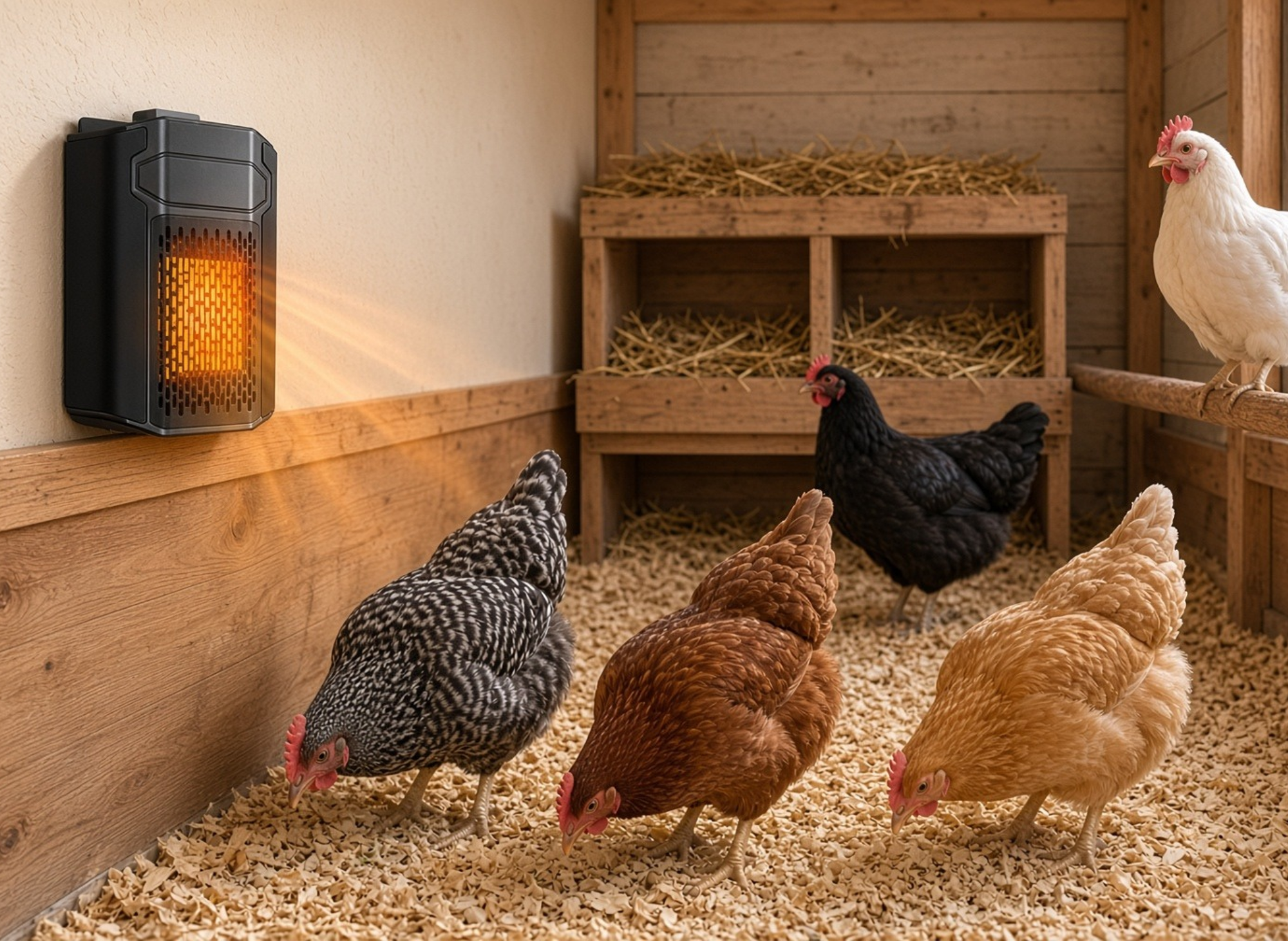
A wall-mounted, low-wattage flat panel radiant heater is generally the safest chicken coop heater for adult chickens. These panels provide gentle radiant heat without exposed bulbs, open flames, or fragile glass, making them purpose-built for dusty, enclosed spaces like a chicken coop.
A safe chicken coop heater avoids the problems that make traditional heat lamps so dangerous. Heat lamps are a leading cause of coop fires. Bulbs shatter, clamps loosen, and a single 250W lamp buried in straw hay or shavings can ignite bedding in minutes. Low-wattage radiant heaters can provide a safe microclimate for vulnerable birds without any of that risk.
Here is the good news: you do not need to heat the entire chicken coop like a living room. A 100–200W flat panel heater aimed at the main roost or perch area is usually enough heat to keep your flock comfortable through cold nights. The goal is localized warmth, not ambient temperature control for the whole air space.
This article compares four specific products: the Cozy Products "Cozy Coop" panel, the OTSEZE 200W radiant panel, the PETNF 500W WiFi shelter heater, and a hanging chicken thermostat panel. You will find a comparison chart, pros and cons for each, and a safety checklist you can use before winter hits.
Do Chickens Really Need a Heater in Winter?
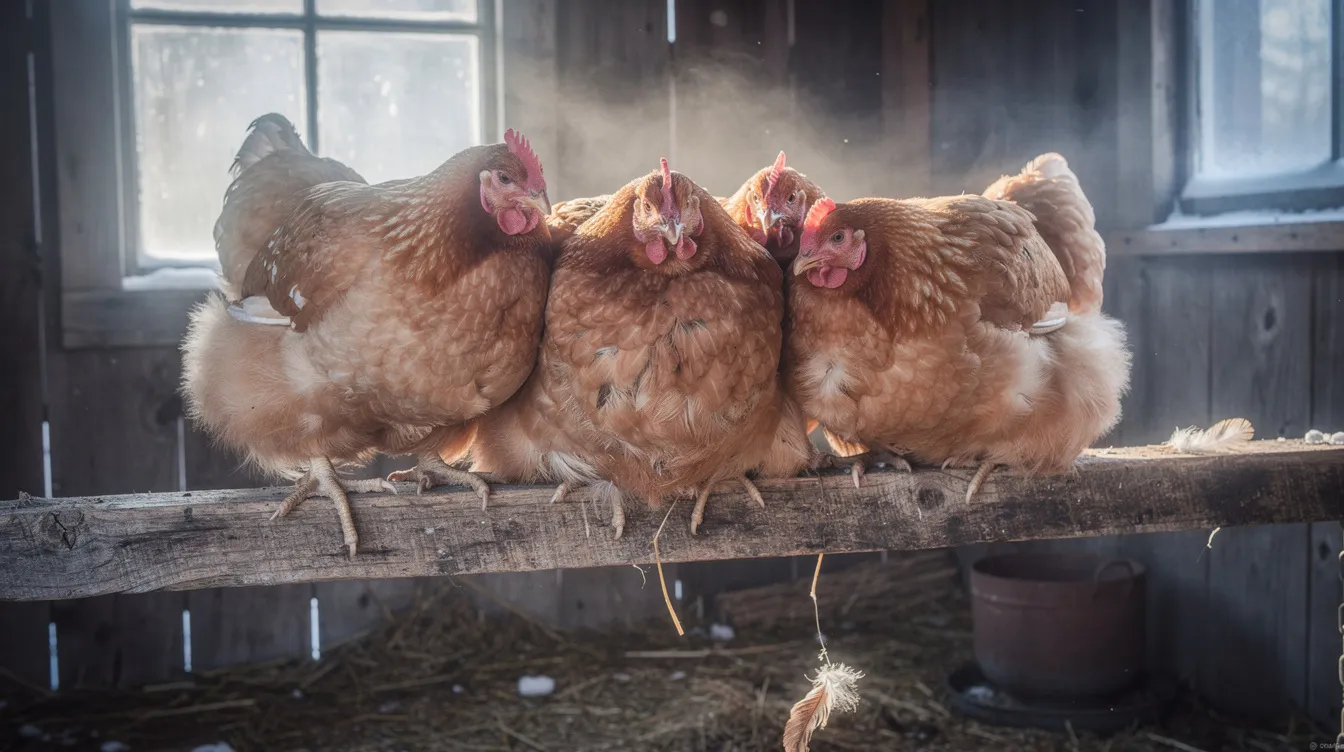
Most adult chickens do not need heat in winter. Healthy, well-feathered birds in a dry, draft-protected coop handle sub-freezing temperatures surprisingly well. Chickens rely on feathers and huddling for insulation in cold weather, and most backyard chickens are hardy and have down feathers for cold. Heating a coop is unnecessary in most climates and can actually be harmful if it creates moisture problems or dependency on artificial warmth.
When heat is NOT needed:
- Nighttime lows stay in the 20s–30s°F range (-6 to 0°C)
- Litter is dry and well-managed
- Coop has good ventilation (ventilation is more important than insulation in preventing frostbite in chickens)
- You are raising chickens with cold-hardy breeds like Orpingtons, Wyandottes, or other heritage breeds
- Birds are fully feathered and over roughly 16 weeks old
- Most adult, well-feathered chicken breeds can handle freezing temperatures down to 0°F
When supplemental heat helps:
- Prolonged temperatures below 0°F (-18°C) in very cold climates
- Damp or wet coops where birds cannot stay dry
- Severe wind chill from cold air infiltration
- Small single-comb breeds prone to frostbite (large exposed wattles)
- Sick, thin, or underweight birds
- Baby chicks and birds not fully feathered
The main winter coop goals are to prevent frostbite on combs and wattles, keep chicken water from freezing so they can access it, and reduce cold stress during brutal snaps. A draft-free coop with good ventilation is better than relying on a heater alone. Chickens generate humidity from respiration and droppings, which can freeze on combs, so never seal a coop completely to trap heat, as it leads to moisture buildup.
Climate matters. In Minnesota, night lows of -10°F may warrant a 150–200W radiant panel aimed at the roost plus a heated waterer. In Tennessee, where winter lows hover around 25°F, heavy breeds in a well-insulated coop may get by without heat. Add heat if temperatures drop below freezing and you notice signs of cold stress. Assess coop temperature by observing chickens for signs like lethargy, pale combs, or reluctance to eat.
Heat Sources Compared: Radiant Panels vs Heat Lamps vs Bulbs
Three common heat source families are used in coops: radiant heat panels, ceramic or infrared bulbs, and traditional red heat lamps. Each has different fire risks, energy consumption, and comfort trade-offs.
- Radiant flat panels: Mounted on a wall like a thin board, these emit gentle radiant heat at relatively low surface temperatures. When installed correctly, they carry very low fire risk and are the safer alternative for adult birds in a winter coop. A typical space heater cannot match their safety profile in a dusty environment.
- Ceramic heat bulbs: Screw into standard fixtures and produce heat without visible light. However, they still reach 400°F+ at the bulb surface. If knocked down or buried in bedding, they pose serious burn and fire risks. Use with extreme caution and only for a few hours when absolutely necessary.
- Classic heat lamps: 250W or higher with an exposed fragile bulb and intense point heat. These warm a spot fastest, but heat lamps can burn chickens and cause fires. Heat lamp-caused fires account for a significant portion of winter coop losses. Use them only as a last resort, treating them as a traditional heat lamp alternative rather than a primary solution.
This article focuses on panel-style safe chicken coop heater options and thermostatically controlled shelter heaters, which are purpose-built for small animals and small pets in enclosed shelters.
What Is Radiant Heat and Why Is It Safer for Coops?
Radiant heat works like sunshine: it warms birds and nearby surfaces directly through infrared energy rather than heating all the air in the coop. This is the same principle that makes a fireplace feel warm even when the room air is cool.
- Lower surface temperatures: Radiant panel heaters operate at lower surface temperatures than heat lamps. A typical radiant panel runs around 130–170°F on its heating surface, compared to 400°F+ at the bulb of a 250W lamp. This dramatically lowers ignition risk in dusty bedding near the ground.
- Heats birds, not air: Chickens fluff their feathers and trap radiant warmth against their bodies. You can keep the air just above freezing while birds stay comfortable. This is far more energy efficient than trying to raise the ambient temperature of the entire coop.
- Self-regulating behavior: Radiant panels create thermal gradients. Birds can choose to perch closer when cold or move away when warm, almost like they huddle underneath a brooder heater. This flexibility reduces stress compared to heat lamps that blast a single spot or stay on continuously regardless of bird behavior.
In short: a radiant panel heater is safer (lower surface temp, no exposed bulbs), more energy efficient (150–200W vs 250W+ bulbs), and causes less behavioral disruption. Birds do not chirp loudly or show stress from sudden temperature shifts the way they can under harsh lamp heat, and any initial smell dissipates within a few hours of first use.
How Much Power Do You Need? Heater Wattage and Coop Size
The best heat for your flock depends on coop size, insulation quality, outside temps, and bird count. Wattage on the box is just one factor.
- Small, well-insulated coop (4×6 ft): A 100W radiant chicken coop heater provides localized warmth without exposed bulbs. This is often enough to take the edge off extreme cold nights.
- Typical backyard coop: 200 watts is ideal for a chicken coop heater's energy consumption. A 150–200W flat panel near the roost area covers most situations for winter lows down to roughly -10°F.
- Larger or poorly insulated coops: In cold climates with extended severe cold below -20°F, you may need a 300–500W thermostatic heater aimed at one section. For example, the PETNF 500W WiFi shelter heater is rated for enclosed shelters up to about 150 cubic feet when properly insulated. For a typical 4×4×6 ft coop, that is more than enough heat.
You are not trying to heat the entire chicken coop to room temperature. Aim for just above freezing near water and roosts. Multiple small heat sources are usually safer than one huge electric heating device. Space heaters pose serious fire risks in chicken coops and should never be used. A typical space heater lacks the dust protection and low-clearance design that a purpose-built coop heater provides.
For context on your electricity bill: a 200W panel running continuously for 90 days consumes about 432 kWh, costing roughly $79 at average US rates. With thermostat regulation, you will break even on energy costs much faster because the panel runs only when needed, keeping season-long energy consumption to a minimum.
Thermostats and Smart Controls: Avoid Overheating
Many coop panels are simple on/off devices. Without a thermostat, they run continuously, wasting electricity and risking severe overheating in mild weather. A safe chicken coop heater should not overheat or cause frostbite from sudden temperature swings when power cycles.
- Plug-in thermostat controllers turn the heater on when the temperature drops below a set point (e.g., 35°F) and off when it rises above it (e.g., 45°F). This keeps chickens warm without cooking the coop.
- PETNF 500W WiFi shelter heater: This unit includes an external temperature probe you can place at birds' resting height for accurate readings, plus app control with an adjustable 41–113°F range. Its ECO mode cycles the heater off when ambient temperature reaches the target and resumes when it drops roughly 3–4°F below. It also includes overheat protection and an IPX5-rated waterproof controller.
- Hanging chicken coop thermostat panel (B0HFMLRTGW): This option pairs a low-wattage radiant panel with a roughly 59–120°F adjustable thermostat in a hanging design. Exact specs are limited, but the core benefit is automated control, so the heater runs only when needed, cutting costs and reducing risk during continuous use.
- App-based scheduling and timer shutoffs (0–24 hours) are an added benefit for owners in harsh climates or who travel. You can monitor and adjust from your phone instead of walking out to the coop at 2 AM with a remote in freezing weather.
Where to Place a Chicken Coop Heater (Roosts, Nesting Box, and Water)
Even the best heater can be unsafe or ineffective in the wrong spot. Improperly placed heaters can lead to overheating and burns. Position matters as much as the product you choose.
- Roost area: Mount a flat panel heater on a wall 12–24 inches from the main roost. Radiant warmth should reach perched birds' bodies and combs, but stay high enough that chickens cannot peck at or roost on the unit. Most models can be easily mounted with the included brackets.
- Nesting box area: Usually does not need direct heat. Too much warmth here encourages year-round laying stress and can over-dry bedding and eggs. Keep your nesting box further from the heat source.
- Water station: Heated water is often more crucial than heating the coop air. Use a heater only if water freezes in the coop. A small radiant panel or dedicated heated waterer base near the drinker keeps water liquid. Keep chicken water from freezing so they can always access it.
Ideal small-coop layout: Mount the heater on the long side wall at roost height. Run roost bars parallel to that wall so birds sit within the radiant zone. Place nesting boxes at the opposite end, further from the panel. Keep ventilation openings high up on opposite walls.
Route all wiring along framing or through conduit, outside pecking reach, with the power cord exiting through a protected hole. Introducing chicks to this setup requires special precautions: keep them in a separate brooder area with a brooder heater at the correct temperature, and monitor chicks' behavior closely.
Safety Checklist: Reducing Fire Risk in the Chicken Coop
Dust, feathers, straw hay, and dry bedding make coops inherently flammable. Treat any heat source inside with care. Emergency shut-off switches enhance safety in coop heaters and should be considered a minimum requirement.
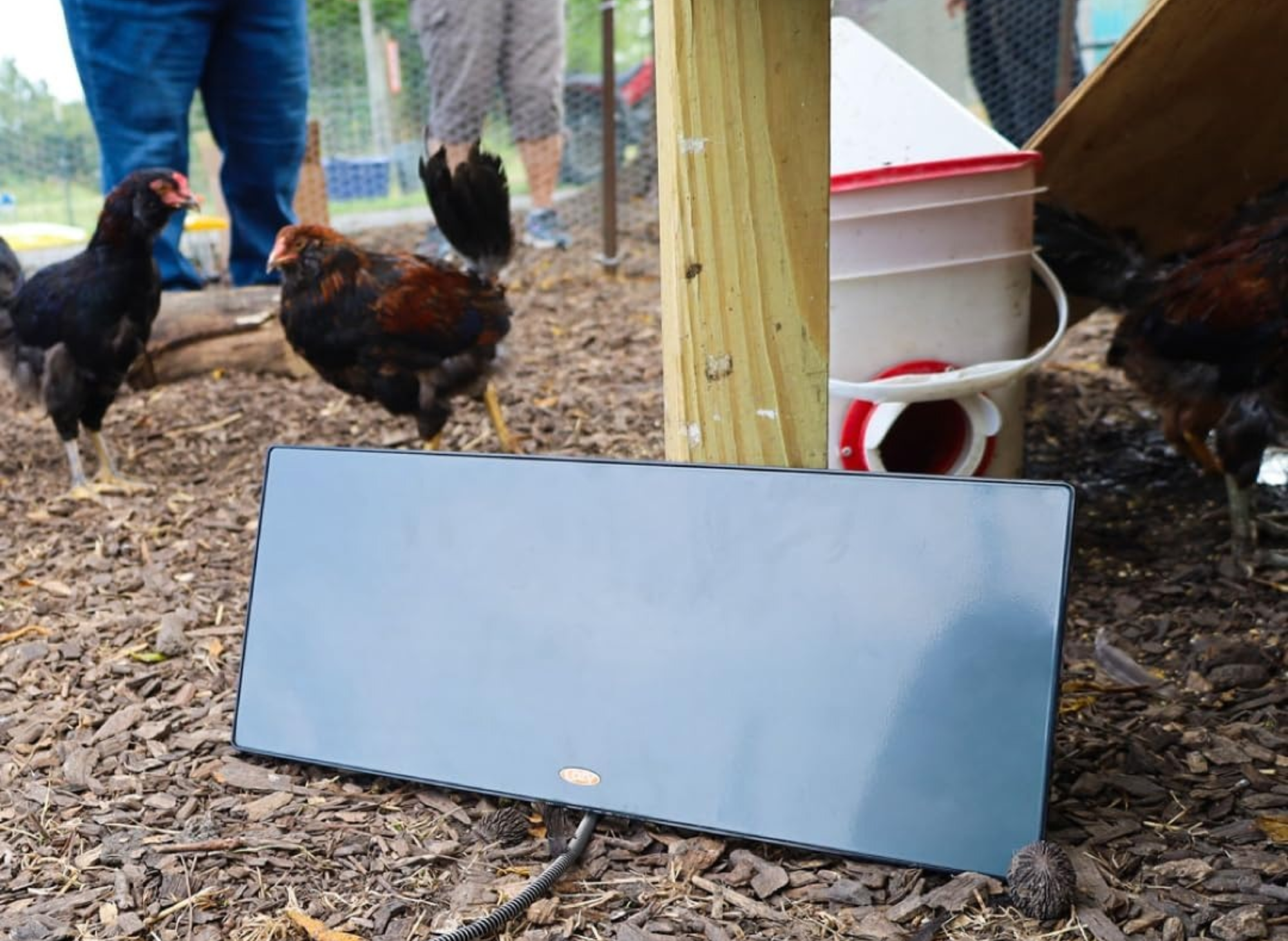
- Use only certified heaters: Look for UL or ETL listings. The Cozy Coop panel is ETL-listed with zero clearance ratings. PETNF units specify flame-retardant materials and overheat protection. Never allow combustible materials like bedding or feathers to touch hot surfaces.
- Secure mounting: Use included brackets or solid fasteners on wall studs. Avoid cord strain. Prevent birds from roosting directly on top of heaters. Wall-mounted panels should sit flush and firm, not loosely clipped. A free-standing panel needs a stable base on a level ground surface.
- Protect wiring: Keep electrical cables protected from pecking and moisture to prevent hazards. Use anti-bite cord sections (like those on OTSEZE and PETNF units), run cords through conduit, and route along framing at least six inches above bedding level.
- Electrical standards: Use outdoor-rated or GFCI-protected outlets. Avoid extension cords unless they are rated for outdoor and heavy-load use. Never daisy-chain power strips in a coop.
Heat lamp warning: Many winter coop fires start from dropped 250W bulbs, loose clamp fixtures, or bulbs buried in litter. Heat lamps are a leading cause of chicken coop fires. Even with guards and secure mounts, a single failure point—a cracked bulb, a kicked clamp, a gust of wind—can put your entire flock and barn at risk. A radiant chicken coop heater is always the safer option for season-long use.
Product Comparison: Popular Chicken Coop Heater Options
Below is a side-by-side comparison of four chicken heater options commonly found on Amazon. Each serves a slightly different use case depending on your coop size, climate, and comfort with technology.
Feature | Cozy Products "Cozy Coop" | OTSEZE 200W Panel | PETNF 500W WiFi Heater | SolarCluck Thermostat Panel (B0HFMLRTGW) |
|---|---|---|---|---|
Type | Flat radiant/convection panel | Flat radiant panel | Box-style shelter heater | Hanging radiant panel |
Wattage | ~150–200W (listing varies) | 200W | 500W | 1500W |
Temp Control | High/low switch only | Remote + onboard buttons | WiFi app + wired controller, 41–113°F | Built-in thermostat, ~59–120°F |
Mounting | Wall-mounted or free-standing with legs | Adjustable angle, wall mount | Enclosed shelter mount | Hanging design |
Safety Certs | ETL-listed, zero clearance | Not specified in listing | Flame retardant, overheat protection, IPX5 controller | Not specified |
Cord | ~9 ft 10 in | 3 m with anti-bite wire | Anti-bite metal section | Not specified |
Best For | Small–medium coops, simple setup | Feature-rich 200W upgrade | Larger coops, harsh climates, remote monitoring | Budget thermostat control |
Flat panel heaters can be wall-mounted or freestanding depending on the model. Match your choice to your coop size and your specific situation.
Pros and Cons of Each Featured Chicken Coop Heater
Here is a breakdown of each product with honest pros and cons based on available specs, reviews, and certifications.
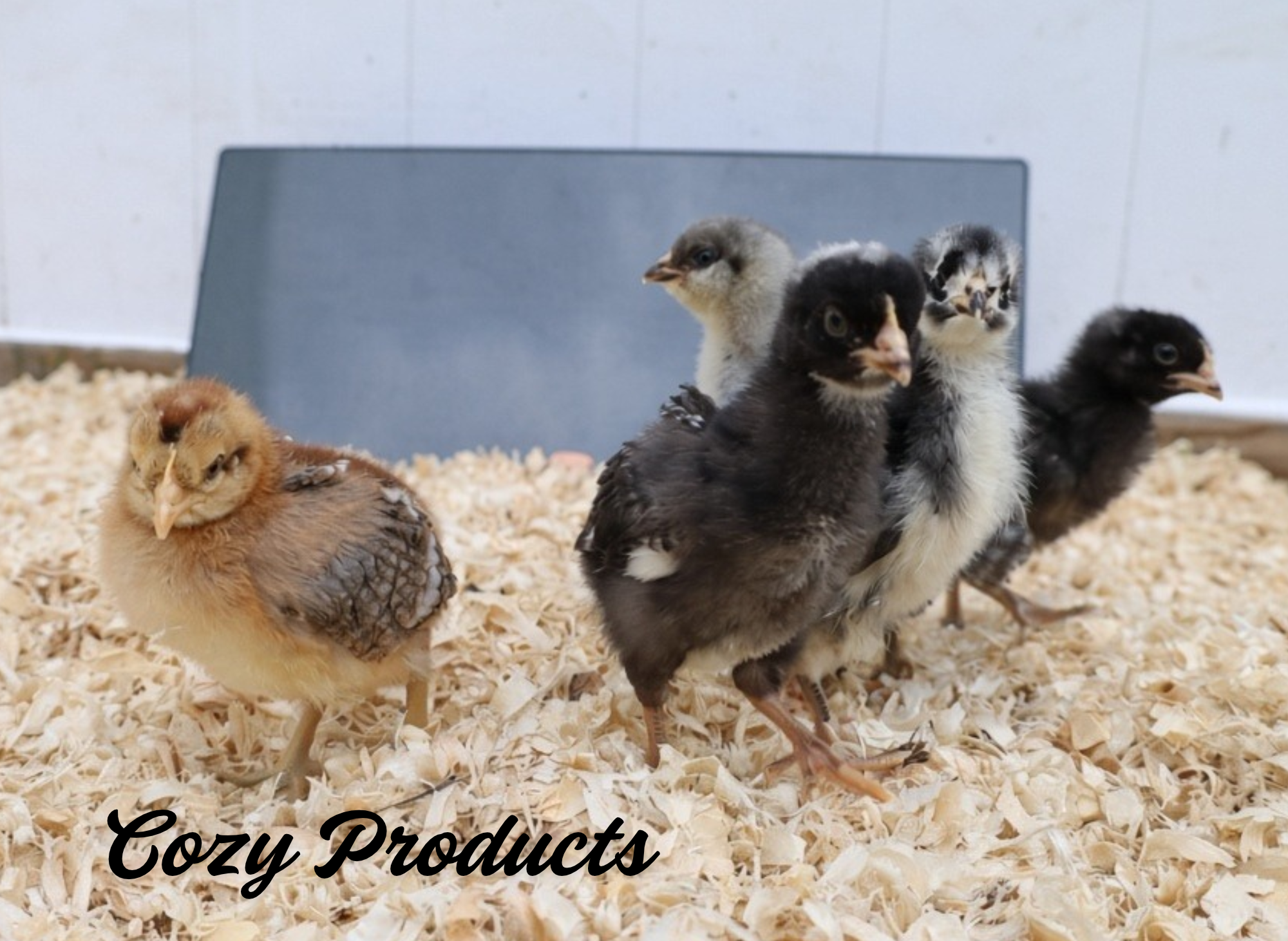
Cozy Products Cozy Coop Chicken Coop Heater, Flat-Panel, 150 Watts
Wall Mount or Free Standing, Electric 150 Watts Safer Than Heat Lamps Warms Inside Chicken Coops Flat Panel 2 Inches Deep
Cozy Products "Cozy Coop" Panel
- Pros: Long track record with thousands of reviews, simple no-bulb design, moderate ~150W draw keeps the electricity bill low, ETL-listed with zero clearance rating, easily mounted on a wall or used as a free-standing unit. Works well as a Sweeter Heater–style radiant option for keeping chickens warm in most backyard coops.
- Cons: Inconsistent listed wattage (150W in title vs 200W in specs), mixed reports on heat output in larger coops, no smart controls or thermostat—runs continuously unless you add an external controller.
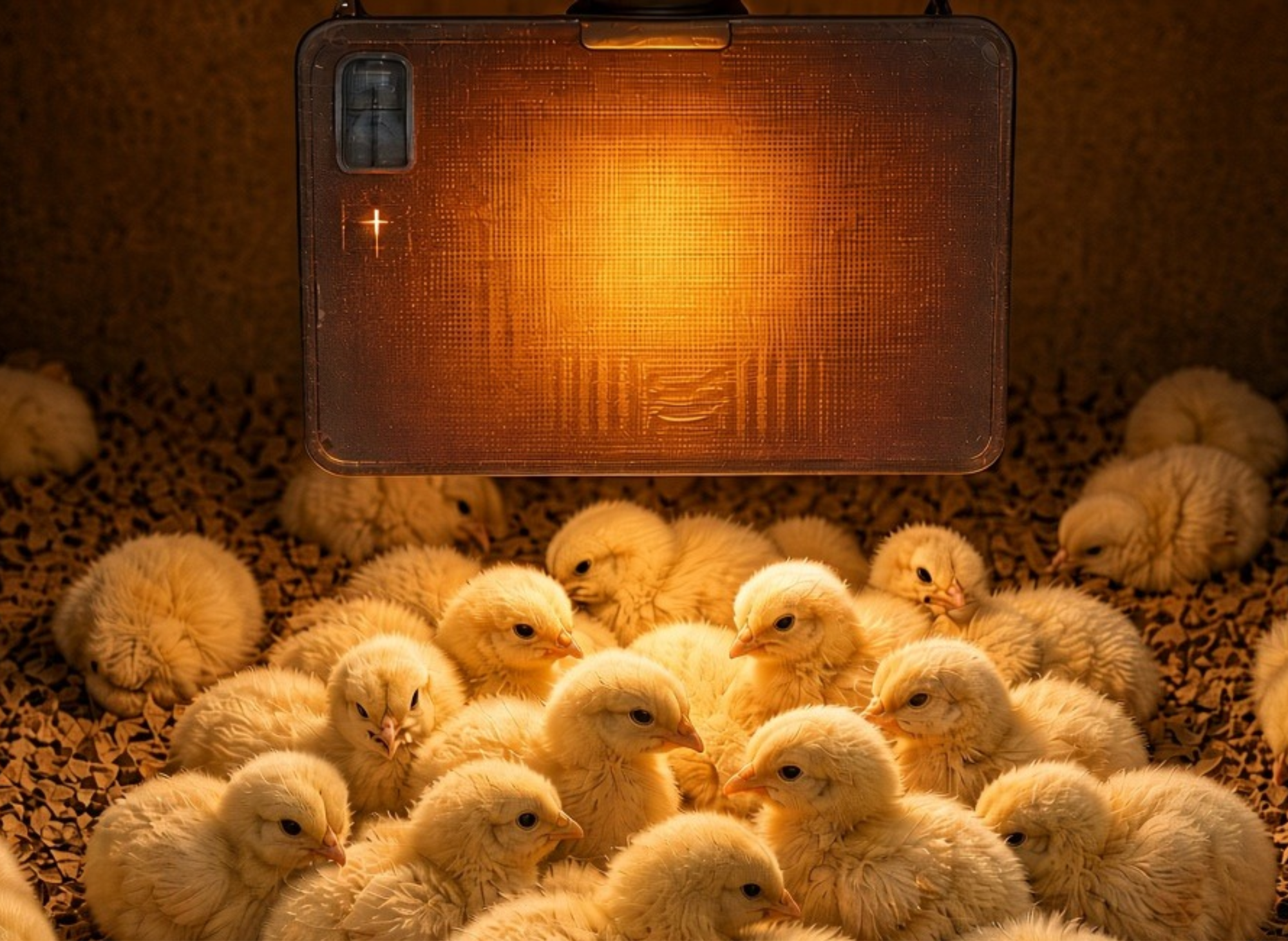
OTSEZE 200W Chicken Coop Heater, Radiant Heat Panel with Thermostat
Chicken Coop Heater for Winter supports chick brooding, chicken heaters inside the coop, and chicken coop warmer needs
OTSEZE 200W Radiant Panel (B0HK3QYFZP)
- Pros: 200W radiant output for enough heat in a typical coop, remote control plus panel controls, adjustable angle to direct warmth, anti-bite wire on the cord, perfect 5.0 rating in its review sample.
- Cons: Higher price than many 200W competitors, fewer total reviews (26 at time of research), no explicit safety certification (UL/ETL) mentioned in the listing. Verify certifications before buying.
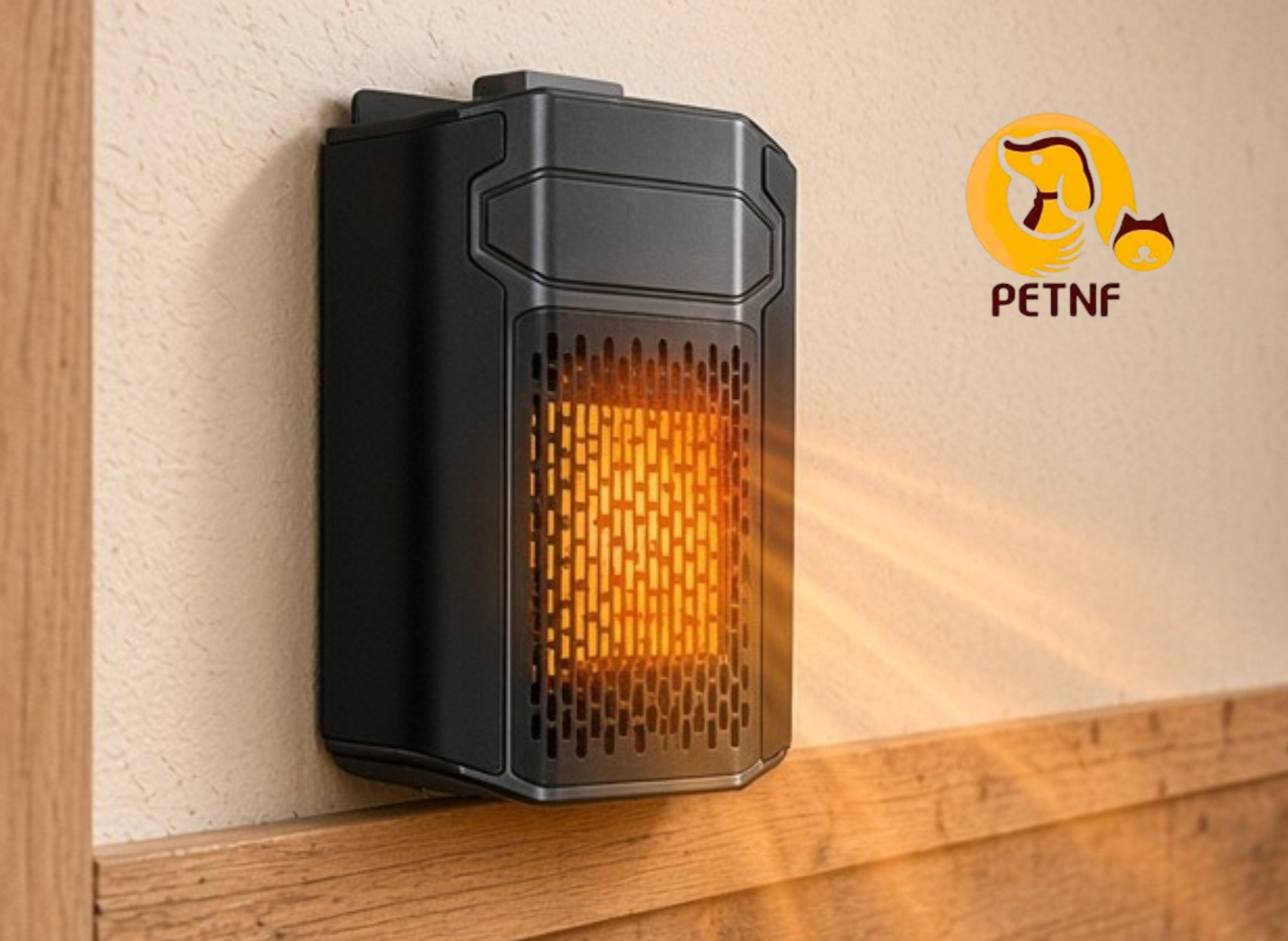
PETNF Dog House Heater with Thermostat Smart WiFi App Control
500W Dog House Heaters for Outside Doghouse, Chicken Coop, Kennel, Cat, Outdoor Pet Heater with External Temp Probe & Adjustable Temp Timer
PETNF 500W WiFi Shelter Heater (B0HFWMQP5K)
- Pros: External temperature probe for accurate readings at birds' resting height, WiFi/app plus wired controller for remote control monitoring, 41–113°F adjustable range, timer and scheduling for set-and-forget operation, rated for up to ~150 cu. ft. shelters, multiple safety features including overheat protection and anti-bite cord. A strong choice for very cold climates.
- Cons: Higher power draw (500W) means a bigger electricity bill, can overheat small or poorly insulated spaces if not controlled properly, requires a WiFi signal at the coop, and some regions may face shipping limitations.
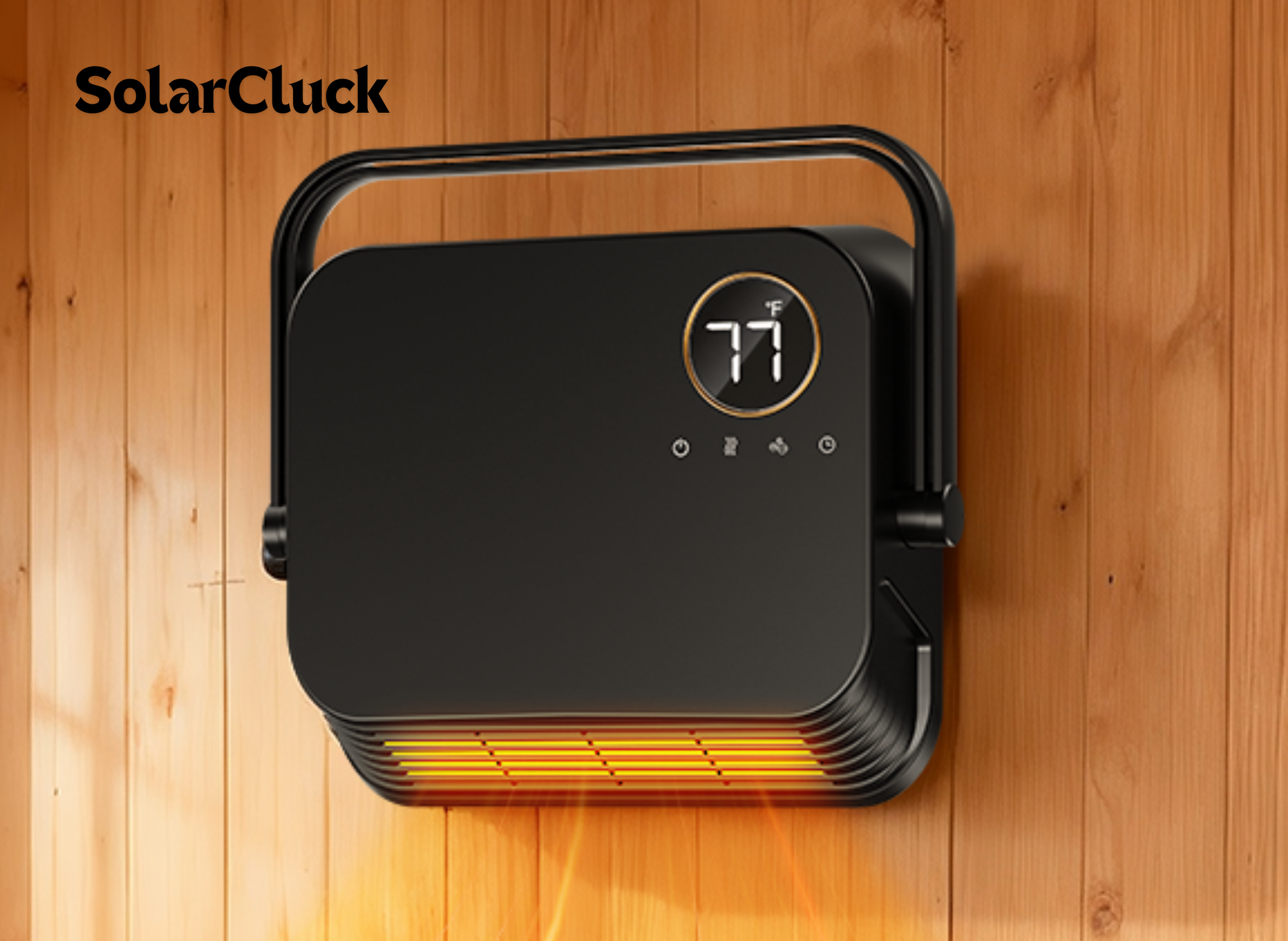
SolarCluck 1500W Chicken Heater for Coop with Thermostat
Wall Hanging Design, 59-120℉ Adjustable Range, 3 Modes Fast Heating, 24H Timer, PTC Ceramic Heater for Poultry in Winter
SolarCluck Thermostat Panel (B0HFMLRTGW)
- Pros: Integrated thermostat (roughly 59–120°F) automates heating; hanging design keeps the panel off bedding and away from combustible materials; low-wattage targeted radiant heat for a safe heating approach to keeping chicks warm and adult birds comfortable.
- Cons: Exact wattage is not specified in available listings, no visible UL/ETL certification, temperature probe details unclear, limited public reviews. Treat as a budget option and verify specs before purchase.
Match any heater to your coop size, climate, and bird age. Purpose-built flat panels and thermostatic units are always safer than improvised solutions, and no one should use a clamp-on heat lamp as a permanent winter coop solution.
Installation, Cleaning, and Maintenance
Proper installation and routine checks keep even the best heater working safely for years. A modal open media of installation videos from manufacturers can help, but these basics cover most setups.
- Installation: Follow manufacturer instructions. Mount on wall studs or solid framing. Maintain recommended clearances from bedding and walls. For panels, secure at a height chickens cannot peck or roost on but still feel the warmth—generally 12–24 inches above the roost.
- Product-specific notes: Cozy Coop and OTSEZE panels can be wall-mounted or used with legs. The PETNF heater mounts inside a sheltered enclosure with its probe placed near the birds' resting height. Keep all ventilation unobstructed regardless of heater type.
- Routine inspection: Before each winter, check cords for damage, confirm brackets and screws are tight, vacuum or brush dust from vents and the heating surface, and test thermostats and auto shutoff features. Replace any frayed cords immediately.
- Cleaning: Always unplug the unit and let it cool before cleaning. Wipe flat panel heaters with a damp cloth. Do not immerse or spray directly into vents or electrical housings.
Frequently Asked Questions About Coop Heaters
What is the best heater for a small backyard coop?
A low-watt flat panel heater in the 100–200W range, ideally with thermostatic control, is the best chicken coop heater for most small setups. Healthy adult chickens tolerate cold well but may need heat in extreme conditions, so a simple panel near the roost is usually enough.
Should I heat the entire chicken coop or just a corner?
Just a corner. You only need the area near the roost and water to stay just above freezing. Heating the entire coop wastes energy and can create harmful moisture when warm air meets cold walls.
Is a heat lamp ever safe?
Even high-quality heat lamps are a last resort because of the fire risk. A safer alternative is always a secured radiant panel or thermostat-controlled shelter heater. If you must use a lamp, use it only for a few hours, under direct supervision, with a proper guard and a secure fixture.
Can I use these heaters for chicks as well as adult chickens?
Brooder plates or brooder heater designs with adjustable height are safer for baby chicks, who need higher starting temps (~95°F). Panels on low settings can work with careful monitoring, but always watch chicks' behavior closely. Adult chickens do fine with standard panel settings aimed at the roost.
Do I really need a heater, or is insulation enough?
Chickens tolerate cold if the coop is insulated and dry. Most cold weather losses come from moisture and frostbite, not cold air alone. Start with proper ventilation and insulation. Add a coop heater only when conditions demand it.
Thank you for reading!
Your friend,
Kelly
Chicken Coop Heater: Keep your flock warm, healthy, and laying all winter with a safe, energy-efficient heater that prevents frostbite.
ChickenCoopHeater #ChickenCoop #BackyardChickens #WinterChickenCare #PoultryHeater #Homesteading #FarmLife #ChickenKeeping #ColdWeatherChickens #EggProduction
🐔🔥❄️🏠🥚🌡️💡🌞🛡️❤️
Amazon Prime offers a wide range of products to meet diverse customer needs, plus fast, reliable delivery. From household essentials and groceries to electronics, clothing, and entertainment, Prime members get access to exclusive deals and discounts across many categories.
Prime membership also includes services like Prime Video for streaming movies and TV shows, Amazon Music for ad-free music, and Prime Reading for eBooks and magazines. This comprehensive suite of benefits makes Amazon Prime a convenient and value-packed option for millions of customers worldwide.
- Audible Premium Plus Annual Membership
- Audible Standard Free Trial
- Audible Standard Monthly Membership
- Amazon Business
- Prime for Young Adults Trial
- Prime Free Trial
- Prime Gaming
- Prime Access Free Trial or Paid Membership
- Prime Paid Membership
- Prime for Young Adults Paid Membership
- Audible Gift Membership: 12-month plan
- Kindle Unlimited Membership: 24-month plan
- Audible Premium Plus Monthly Membership
- Amazon Haul First Purchase
- Kindle Unlimited Membership: 6-month plan
- Amazon Prime Gifting (3-month)
- Prime Music Free Trial
- Amazon Baby Registry Create
- Amazon Wedding Registry Create
- Subscribe & Save – Beauty & Grooming
- Subscribe & Save - GROCERY
- Subscribe & Save – Health & Personal Care (HPC) – Excluding Diapers
- Subscribe & Save – Pet Food & Supplies
- Professional Beauty Subscribe & Save Activation and Delivery
- Subscribe & Save - Diapers