
Buying a meat slicer for your kitchen is one of those decisions that sounds excessive until you actually start using one. Once you can slice a whole roast into sandwich-ready portions in minutes, or shave prosciutto paper-thin for a weekend charcuterie board, it's hard to go back to pre-packaged deli meats.
This guide walks you through the real differences between food slicers and electric deli slicers, what features actually matter, four standout models worth considering, and how to use and maintain whichever machine you choose.
Do You Really Need a Meat Slicer at Home?
A home meat slicer is an electric machine with a spinning circular blade that cuts meats, cheeses, bread, and vegetables into uniform slices at whatever thickness you set. Compared to buying pre-sliced deli meats at the store, owning a slicer gives you control over freshness, slice thickness, and cost.
Home meat slicers can help save money by allowing bulk purchase of meats—you buy a whole roast or ham, slice what you need, and freeze the rest. Even a basic home model can help you save without having to break the bank.
The people who benefit most from owning one:
- Families making weekly sandwiches and lunch packs
- Home cooks who cure their own bacon, pancetta, or bresaola
- Anyone who regularly assembles charcuterie boards for entertaining
- Bulk shoppers who portion large cuts for freezing
- Enthusiasts who want thin slices for hotpot, stir-fry, or carpaccio
A basic food slicer is enough if you mostly slice bread, firm cheese, and the occasional cooked roast for sandwiches—and you're fine with slices in the 2–3 mm range.
Upgrade to an electric deli slicer if you cure meats at home, want paper-thin prosciutto-style slices below 1 mm, regularly slice bacon from whole bellies, or batch-slice weekly for meal prep and expect consistent slices every time; knife work or hand slicing can handle very small amounts, but not repeatable ultra-thin results.
Key factors to look for right away: stainless steel blades (smooth for meats, serrated for bread), adjustable thickness control, the ability to slice very thin for cured meats, and safety features like a dual security lock.
Food Slicer vs Deli Slicer for Home Use
The terms get used interchangeably, but there's a real difference. A food slicer is typically a compact, lightweight slicer—often with a plastic or thin metal body, a smaller blade, and a modest motor — while commercial slicers are larger and heavier than compact home models. An electric deli slicer is heavier, built with more metal, runs a larger blade, and delivers the precision and power you'd see in a deli or small café.
Food slicers typically weigh under 12 lb (5.5 kg), making them easy to move and store. Deli slicers are heavier, often 25–40 lb (11–18 kg), and use larger, smooth blades for precision slicing of dense and fatty foods, while heavier units are usually best left in a permanent countertop spot because they're harder to move.
Here's how they compare at a glance:
Feature | Food Slicer | Deli Slicer |
|---|---|---|
Blade size | 7–7.5 inches | 9–10 inches |
Motor power | 100–200W | 200–320W |
Weight | Under 12 lbs | 25–40 lbs |
Min. slice thickness | ~1–2 mm (inconsistent) | Below 1 mm (consistent) |
Best for | Bread, cheese, cooked roasts | Cured meats, bacon, large cuts |
Typical price | Under $150–$250 | $250–$500+ |
Food slicers handle bread, cheese, and cooked roasts well. Deli slicers excel at slicing meats like prosciutto, salami, and home-cured bacon where thin, clean cuts matter. Machines marketed for home use can still include semi-commercial models—a 10-inch 240W slicer with a cast aluminum body is perfectly viable in home kitchens if you have the counter space.
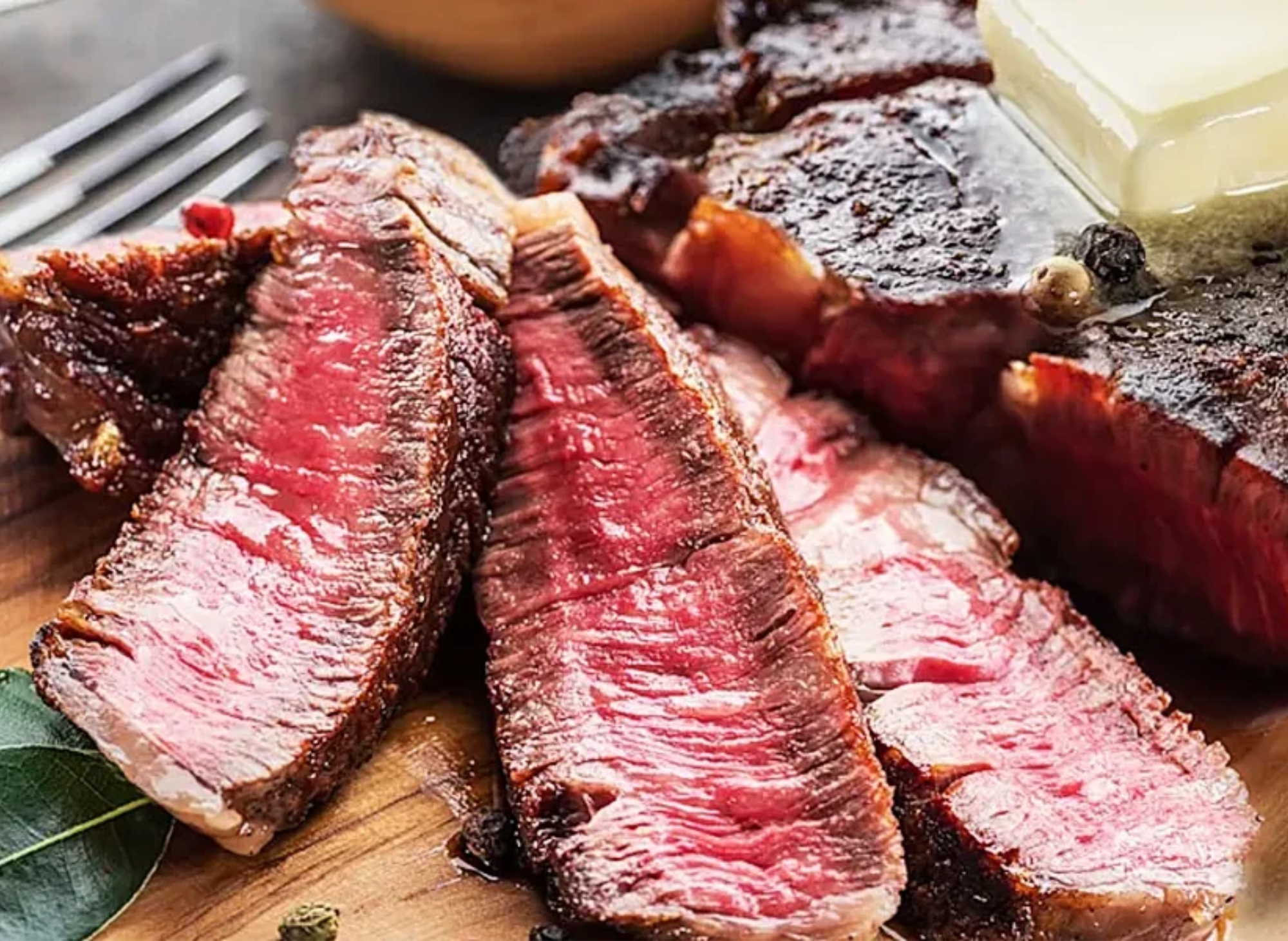
What "Thin Enough" Really Means for Home Slicing
Slice thickness matters far more for cured meats than it does for a sandwich or a loaf of bread. When you shave cured meats thin enough—below 1 mm—the fat softens almost immediately at room temperature, the salt seems milder, and the aroma compounds open up in a way that thick slices simply can't replicate. Thin slices enhance the flavor and texture of cured meats, transforming the eating experience.
Here are the numbers that matter:
- Prosciutto, bresaola, coppa: Below 1 mm—ideally translucent. Thin slicing below 1 mm is crucial for cured meats.
- Sandwich meats (roast ham, turkey): 2–3 mm is the sweet spot.
- Bacon strips: 1–2 mm for crispy frying; 5–8 mm if you're cutting thick lardons for cooking.
Deli slicers can produce slices as thin as 0.59 mm, which is essentially see-through. Entry-level food slicers struggle here because blade flex, weaker motors, and lightweight frames make it hard to hold that precision across a full piece of meat.
Signs your slicer isn't thin enough:
- Fat edges tear or curl instead of laying flat
- Slices stick together or come out ragged
- The motor audibly slows or hesitates under load
- You have to run the same piece through multiple times
- Thickness drifts thicker partway through a session
Why Blade Type, Size, and Machine Weight Matter More Than Wattage
It's tempting to shop by wattage alone, but the best meat slicer isn't necessarily the one with the biggest motor number. A powerful motor helps maintain blade speed under load, but if the blade is too small or the frame flexes, that wattage gets wasted in vibration and drag.
Blade design matters:
- Smooth blades are essential for slicing cured meats—they glide through fat without tearing, producing clean surfaces. Serrated blades are unsuitable for slicing cured meats because they scatter fibers and shred delicate fat layers.
- Serrated blades excel at slicing tough crusts and fibrous meats, crusty bread, and semi-frozen blocks. Many good machines ship with both.
Blade size determines capacity:
- A 7.5-inch blade handles most home tasks but limits the width of meat you can slice in one pass.
- An 8–10-inch blade is ideal for home use when you're working with larger cuts like whole boneless ham or home-cured belly. A 10-inch blade is ideal for home use if you regularly deal with big muscles.
Machine weight controls precision:
- Deli slicers weigh 30–40 lb for stability, and that heft keeps the blade and carriage aligned during slicing, eliminating chatter and vibration.
- Lightweight slicers under 12 lb struggle with dense meats because the frame flexes and the unit can shift mid-slice, causing inconsistent thickness.
- Higher wattage motors, around 180W to 240W, prevent stalling with dense items—but only if the frame is rigid enough to channel that power into the blade.
What You're Likely to Slice at Home (and What Each Food Demands)
Different foods stress a slicer in different ways. Meat slicers can be used for preparing various foods, including cheeses and vegetables, not just meats. Here's what each category demands:
Dry-cured meats (prosciutto, coppa, bresaola):
- Ideal thickness: under 1 mm, translucent
- Requires a smooth blade, rigid frame, strong motor
- A basic food slicer usually can't deliver; an electric deli slicer is the right tool
Bacon (store-bought or home-cured):
- Target 1–2 mm for crispy strips; thicker for grilling
- Chilling meat before slicing helps achieve smooth, even cuts—partially freeze the belly for 30–60 minutes
- Blade must be sharp and carriage stable
Cheese:
- Semi-soft to firm at 1–3 mm; very soft cheese may smear
- Food slicers are adequate for bread and firm cheese
- Smooth blade works best
Bread (sourdough, crusty loaves):
- 5–15 mm depending on preference
- Needs serrated blade; smooth blades won't grip the crust
- Carriage stability matters to avoid compressing the crumb
Roasts and cooked meats:
- 2–3 mm for sandwiches; thicker for dinner plates
- Mid-size food slicers handle this well
Vegetables and fruit:
- Firm vegetables slice cleanly at various thicknesses
- Great for meal prep, stir-fry components, or garnishes
Charcuterie, Cured Meats, and Bacon: When a Deli Slicer Shines
Slicing meats like pancetta, prosciutto, bresaola, and home-cured bacon at home is where cheaper food slicers reveal their limits. The need for slices so thin they're nearly translucent, with undisturbed fat layers that melt on the tongue, separates a machine from a good one.
Deli slicers produce consistent, wafer-thin slices of cured meats because smooth blades glide through fat without tearing. A deli slicer reduces waste by minimizing torn slices and provides consistent thickness across all slices, which matters enormously for both flavor and presentation on charcuterie boards.
A 10-inch electric deli slicer with a smooth stainless-steel blade and adjustable thickness dialed below 1 mm keeps fat layers intact and produces uniform slices that lay flat and overlap beautifully. Deli slicers handle large slabs of bacon efficiently—you can portion a 2–3 kg belly of home-cured bacon into even slices for vacuum sealing and freezing in a single session.
Where the deli slicer's weight, smooth blade, and rigid frame prove essential:
- Full prosciutto or jamón: Blade reach and motor power prevent ragged edges on long, continuous slices
- Home-cured bacon: Consistent thin slicing allows even cooking; every strip renders the same way
- Charcuterie board prep: Overlapping, paper-thin slices with visible translucency require precision that only a sturdy machine delivers
- Bulk packaging: Identical thickness improves freezing performance, stackability, and portion control
Where Lightweight Home Food Slicers Fall Short
Many sub-$150 home food slicers with 7.5-inch blades work perfectly well for bread and cheese, but they aren't engineered for heavy cured meats or frequent large batches. Food slicers struggle with thin cuts on fatty meats because the frame isn't rigid enough to hold the blade steady under pressure.
Common pain points with a lightweight slicer:
- The chassis flexes when you push dense meat through, causing uneven slices
- Serrated blades tear fat layers instead of cutting cleanly
- A weaker motor bogs down on large cuts or semi-frozen blocks
- Vibration causes the unit to "walk" on the counter, and slice thickness drifts during long sessions
- Thickness control dials can be sloppy—near-zero settings produce inconsistent results
This isn't a reason to avoid food slicers entirely. For occasional use—slicing roast meat for sandwiches, cutting cheese, portioning bread—a compact food slicer handles the job. Just don't expect it to produce deli-quality prosciutto or cleanly slice through a 3 kg bacon slab.
When an Electric Deli Slicer Is Worth Owning at Home
A deli slicer is heavier, more expensive, and takes up more space. But it pays off if you slice in batches, buy whole muscles, or cure meats at home. Deli slicers let you control slice thickness precisely, something lighter machines can't match.
Concrete scenarios where the investment makes sense:
- Weekly bulk slicing of ham and turkey for lunches saves money versus buying pre-sliced at the store
- Monthly bacon projects where you're slicing an entire cured belly
- Regular charcuterie boards with whole pieces of salami, coppa, or bresaola
- Slicing raw meat for hotpot or stir-fry where you need paper-thin consistency
Trade-offs to expect: Deli slicers weigh 25–40 lb for stability, need a dedicated counter area with a sturdy table, require more thorough cleaning, and cost more upfront.
You should consider a deli slicer if you slice more than once a week, work with cured meats or whole muscles, freeze sliced portions in stock, and care about uniform slices. If your use is purely occasional-bread, cheese, the rare roast-a compact food slicer or even a good knife may be more sensible.
Key Features That Actually Matter on a Home Meat Slicer
Marketing copy emphasizes blade size and wattage, but real-world performance hinges on a small set of design details that determine build quality and daily usability.
Core performance features:
- Blade size: home meat slicers typically use blades ranging from 7.5 to 10 inches; match to the size of food you slice
- Stainless steel blades in both smooth and serrated options give you versatility; high-carbon chromium-plated blades hold an edge longer
- Adjustable thickness dial with fine resolution—look for a 0–12 mm or 0–15 mm range; thickness adjustments on slicers should range from paper-thin to 1 inch or more
- A powerful motor of 200–300W is sufficient for home use; don't overspend chasing wattage alone
- Carriage rigidity—a sturdy, well-fitted carriage keeps food stable and slices consistent
Safety features:
- Slicers with a child safety lock add to operational safety—look for a dual security lock that requires two actions to start
- Blade ring guards to prevent accidental contact
- Non-slip or suction feet for stability
- Recessed or low-voltage on/off switches
Convenience for home kitchens:
- Removable blade designs facilitate easier cleaning of meat slicers; look for removable parts including carriage, food pusher, and drip tray
- Built-in or included sharpener so you can keep the blade sharpened without buying separate tools
- Compact footprint if storage or space is a concern
How to Choose the Best Meat Slicer for Home Use
Rather than comparing spec sheets, start with your actual habits and work backward.
Step 1: What do you slice?
- Cure meats or slice cured meats weekly? → Prioritize a smooth blade, 10-inch size, heavy frame
- Mostly bread and cheese? → A compact 7.5-inch food slicer is enough
- Mix of everything? → Look for dual-blade machines with both smooth and serrated options
Step 2: How much space do you have?
- Measure your counter. A 10-inch deli slicer needs roughly 20 × 17 inches of footprint. Consider storage options if you won't leave it out.
Step 3: What's your budget?
- Under $150: Smaller blades (7–7.5 inches), 100–200W, more plastic, basic safety. Fine for occasional use.
- $150–$300: 7.5–9-inch blades, better metal construction, possibly dual blades, improved safety features.
- $300+: Semi-commercial 10-inch models, 240–320W, heavy aluminum or steel body, built-in sharpeners, precise thickness dials.
Before buying, check: minimum slice thickness capability, blade size relative to your typical cuts, ease of cleaning (removable parts vs. fixed), and manufacturer warranty. The best slicer is the one that matches your actual slicing habits—not the one with the most features you'll never use.
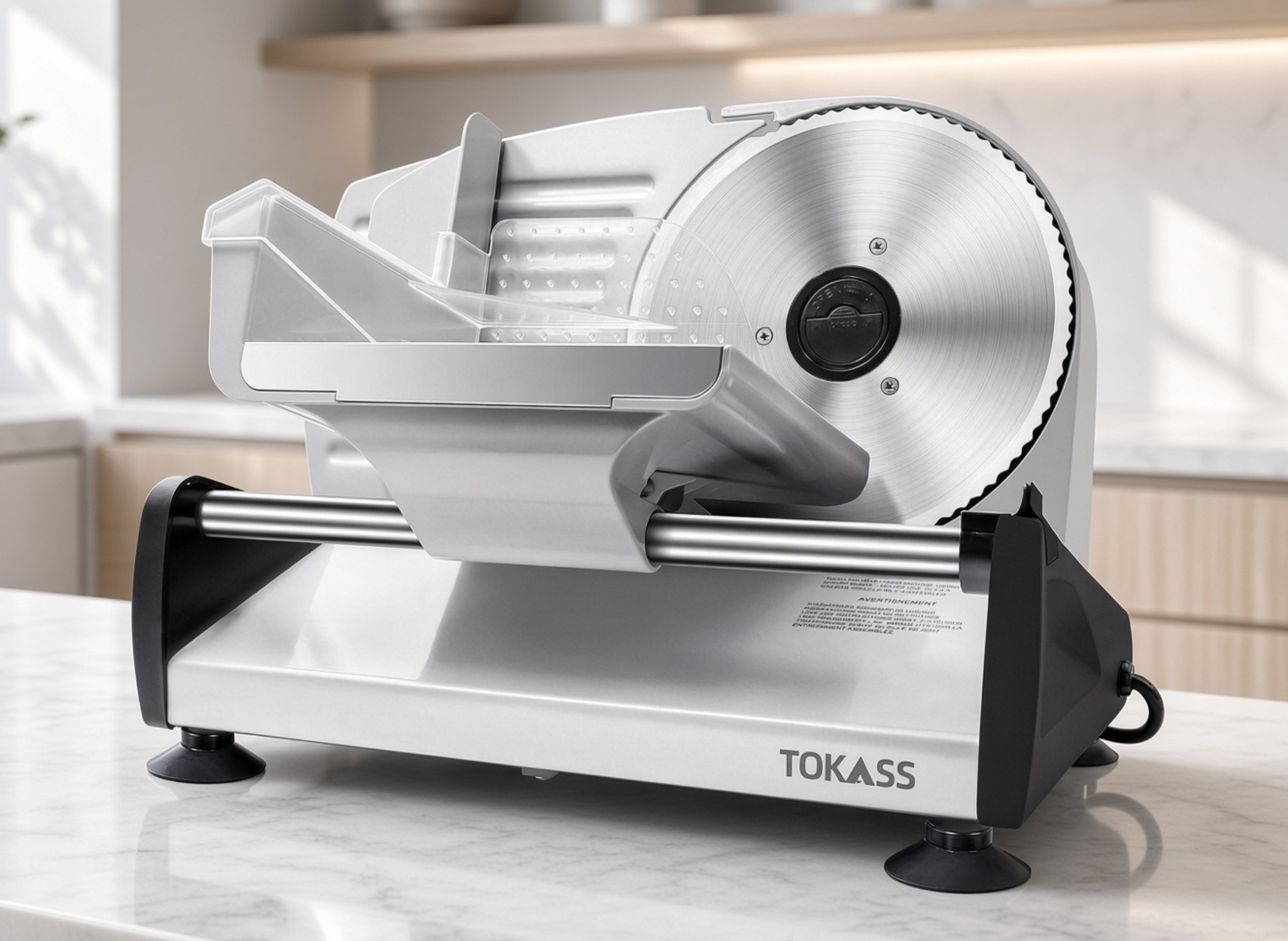
TOKASS Meat Slicer Machine for Home, 200W Food Slicer with Two 7.5" Blades
200W Motor, 2 Removable 7.5" Stainless Steel Blades, Stainless Steel Tray, Child Lock, 0-15 mm Adjustable Thickness
Product Spotlight: TOKASS 200W 7.5-Inch Home Food Slicer (B0BL2G1378)
A compact electric deli slicer built for everyday home use, the TOKASS model packs dual stainless steel blades into a machine that fits comfortably on most countertops.
- 200W motor with two removable 7.5-inch stainless steel blades—one serrated for bread and firm foods, one smooth for cooked meats and cheese
- Stepless adjustable thickness from deli-thin up to about 15 mm, letting you go from fine sandwich slices to thick bread cuts
- Two-button child-safety lock (dual security lock) prevents accidental startup—you must press the safety lock and power button simultaneously
- Removable parts, including the blade, food carriage, and stainless-steel tray, make cleaning straightforward (hand wash only)
- Customer feedback sits around 4.3/5, with users praising convenience and ease of cleaning; some note difficulty achieving ultra-thin slices due to the lighter frame
Best uses: Weekly sandwich meat slicing from roasts, prepping cheese and crusty bread, cutting vegetables for hotpot or stir-fries. This model suits regular home use and is a solid entry point—but it's not built for heavy commercial volume or slicing whole legs of ham.
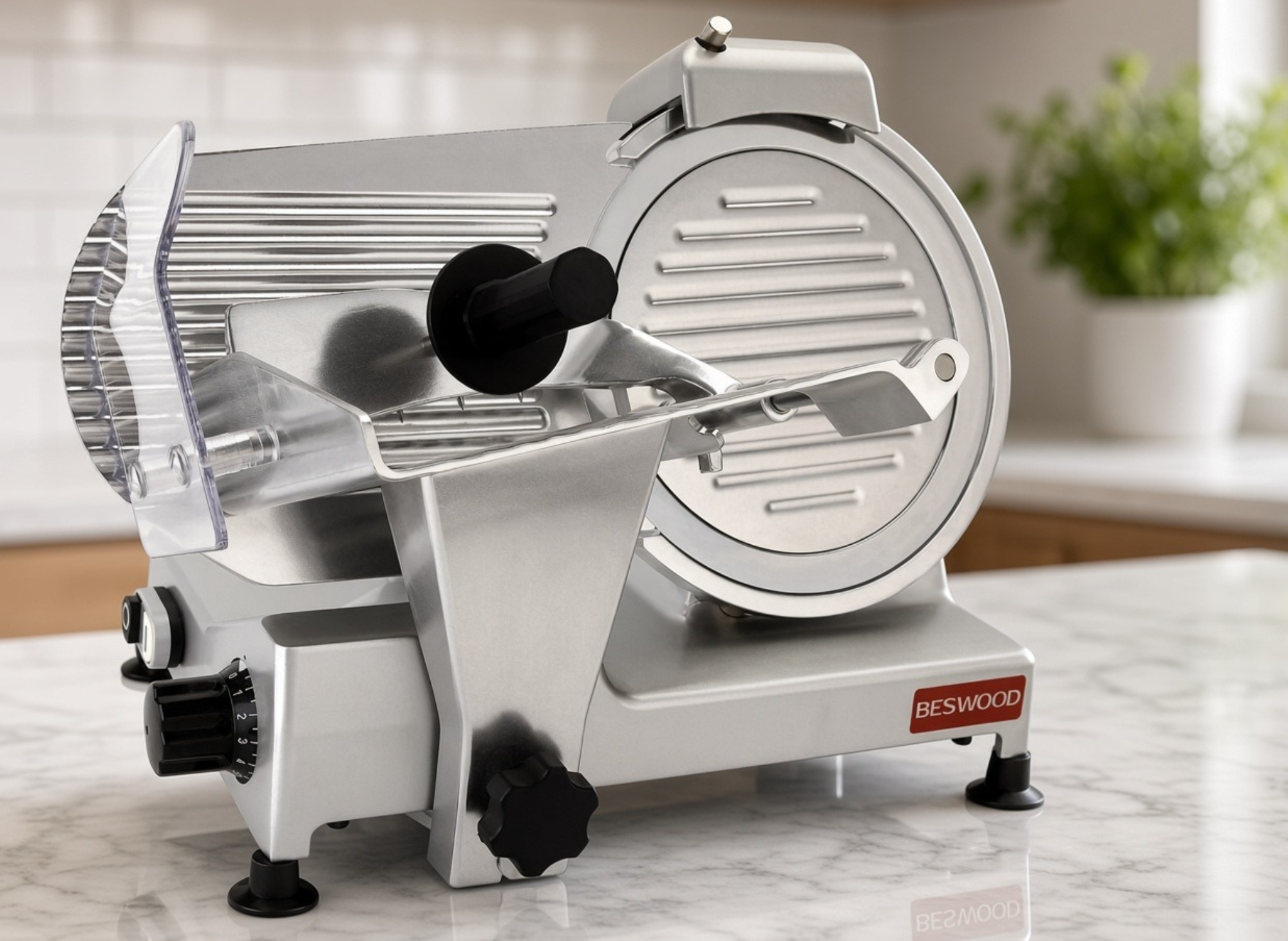
BESWOOD 10" Electric Deli Meat Slicer
Cheese Food Slicer with Premium Chromium-plated Steel Blade, for Commercial and for Home Use 240W, BESWOOD250
Product Spotlight: BESWOOD 10-Inch 240W Electric Deli Meat Slicer (BESWOOD250)
This is a semi-commercial electric deli slicer that serious home charcuterie fans and small food businesses will appreciate. It's built to handle the demands of frequent, precision slicing.
- 240W motor paired with a 10-inch high-carbon chromium-plated steel blade designed to resist corrosion and stay sharp longer
- Built-in two-stone sharpener so you can maintain edge quality without separate tools
- Heavy aluminum body at approximately 33 pounds provides the stability needed for consistent slices; includes removable product table, blade ring guard, non-slip rubber feet, and illuminated 24V on/off switch
- Adjustable thickness from deli-thin to about 12 mm; handles boneless meats, ham, cheese blocks, vegetables, and fruit
- Dimensions: 20 × 17 × 14.75 inches-this is a permanent counter appliance, not something you'll be tucking in a cabinet after each use
Best uses: Frequent batch slicing at home, prepping charcuterie boards with paper-thin cured meats and bacon, or daily use in a café or small restaurant. If you want a machine that delivers consistent slices session after session and you have the counter space, this is the model to consider. The price reflects the build quality and blade design—it's an investment that pays off over years of use.
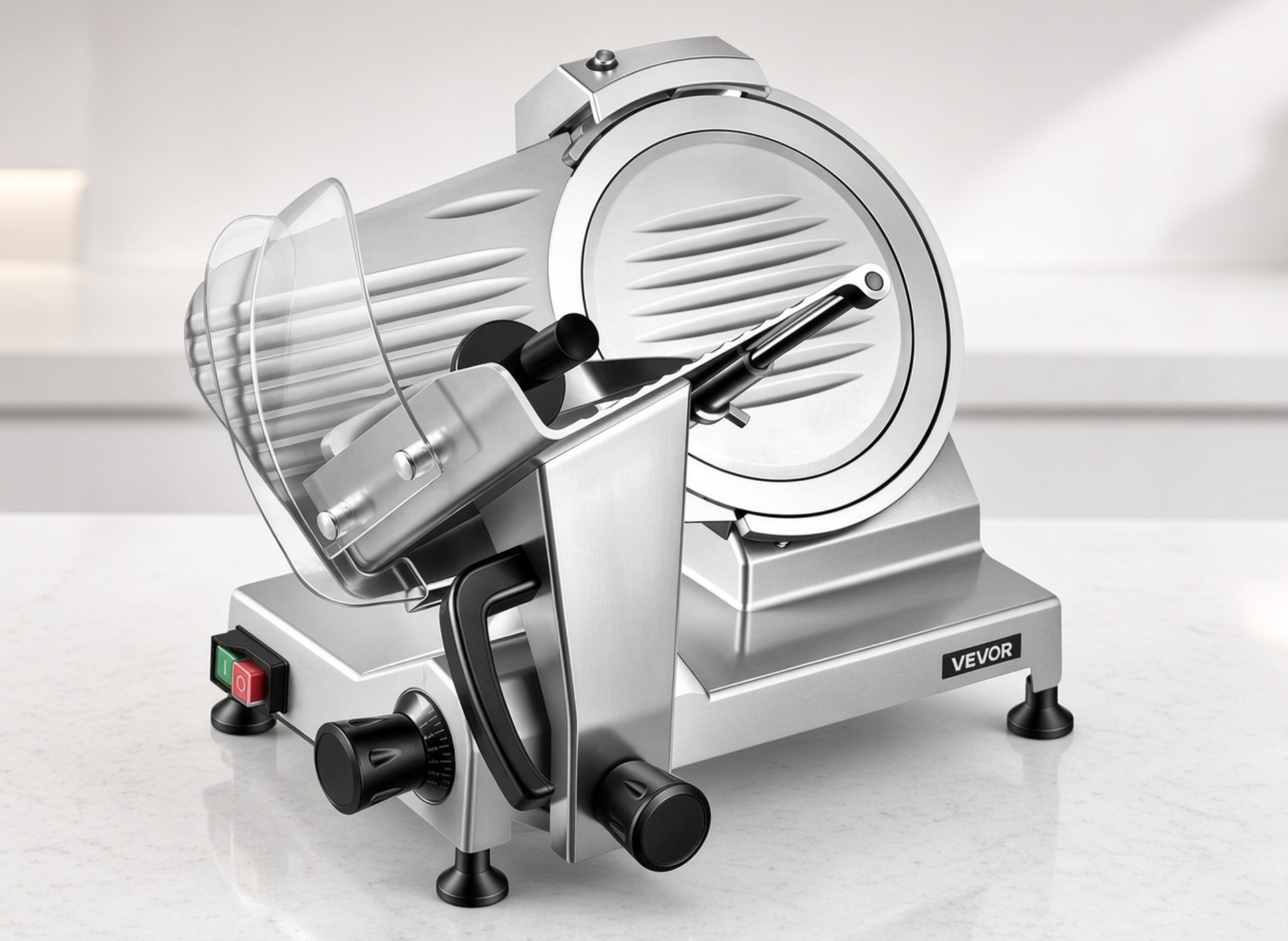
VEVOR Commercial Meat Slicer
10-inch Electric Food Slicer, 240W Frozen Meat Deli Slicer, Premium Chromium-plated Steel Blade Semi-Auto Meat Slicer for Commercial and Home use
Product Spotlight: VEVOR 10-Inch Semi-Auto Meat Slicer (B08R7JJF3R)
A value-oriented semi-automatic meat slicer that blurs the line between home and commercial use, the VEVOR offers serious capability at a competitive price.
- 240W motor with a 10-inch carbon-steel blade and adjustable slice thickness from 0 to 12 mm
- Built-in sharpener, stainless-steel tray, and spiked food pusher that grips meat securely during slicing
- Semi-auto operation assists with repetitive slicing of larger cuts—helpful for food-prep days or batch work
- Non-slip feet and sturdy metal carriage provide the stability needed for handling frozen, raw, or cooked meats and ham
- User reviews average around 4.4/5 from over 1,200 ratings, praising slicing power and thin slicing; feedback on cleaning and long-term durability is mixed—carbon steel requires more care to avoid rust
Best uses: Slicing raw meat, frozen blocks, and cooked meats for deli-style portions. Ideal for food-prep days, home-cured bacon slicing, or small commercial kitchens. Regular maintenance—including checking blade sharpness and drying the blade thoroughly—is essential with this unit.
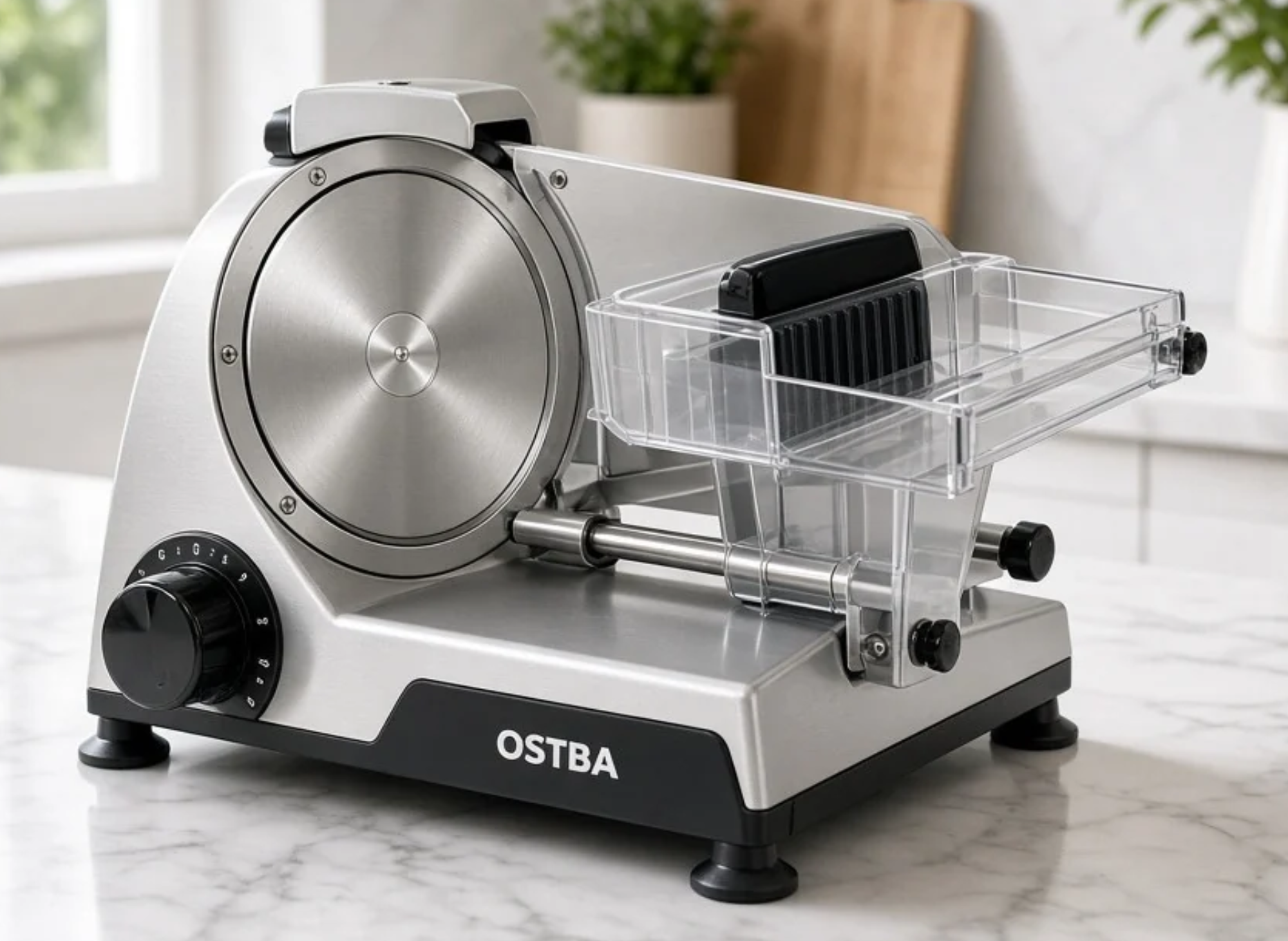
OSTBA Electric Meat Slicer with Two 7.5” Stainless Steel Blades, 200W
Deli Food Slicer with 0-15mm Adjustable Thickness for Home Use, Child Lock Protection, Cuts Meat, Bread, and Cheese
Product Spotlight: OSTBA Electric Meat Slicer with Two 7.5” Stainless Steel Blades, 200W (B0BF5NPNXY)
Another compact 200W home meat slicer with removable 7.5-inch stainless steel blades, this model focuses on versatile meal prep with easy cleanup.
- Twin-blade setup: one serrated blade for firm foods and bread, one smooth blade for cooked meats and cheese-both easily removable for cleaning
- Adjustable thickness dial ranging roughly 0–15 mm, enabling thin deli-style cuts and thicker slices; advertised suitability for frozen meat with the serrated blade
- Safety lock system requires simultaneous use with the power button; non-slip suction feet keep the unit planted during operation
- Removable carriage, slide-rod extension, and food pusher make cleaning more thorough than fixed-carriage designs
- Compact enough for small home kitchens where storage matters and light enough to move but stable enough for moderate slicing sessions
Best uses: Occasional home slicing of roast meats, cheese, sourdough loaves, vegetables, and fruit. This slicer handles light to moderate home use well and offers solid convenience for the money, but it's not designed for continuous commercial duty or heavy cured-meat work.
How to Use a Home Meat Slicer Safely and Efficiently
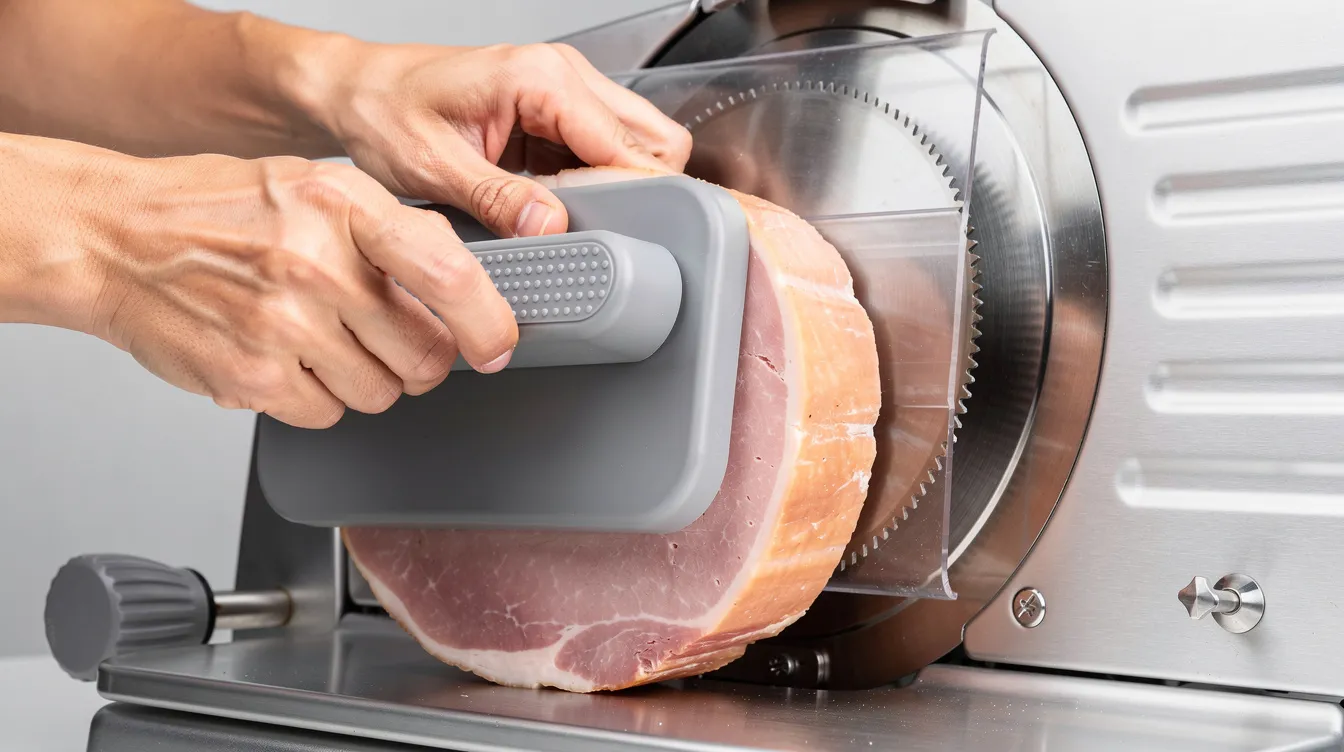
Safety starts before you turn the machine on. Always unplug before cleaning or adjusting the blade. Using a food pusher is crucial to safety when slicing meat—never guide food with your bare hands near the blade. Slicers should be placed on a flat, stable surface to ensure safe operation.
Operating steps:
- Set your desired slice thickness before turning on the motor
- Position food securely on the carriage and engage the food pusher
- Use a smooth, steady motion while slicing-this enhances the quality of cuts and prevents the blade from grabbing
- Apply consistent pressure while slicing to prevent uneven cuts; don't force food through faster than the blade can handle
- Batch your slicing to minimize setup and cleanup time
When to partially freeze meats: For raw meat or very fatty cuts, 30–60 minutes in the freezer firms the texture enough to slice cleanly without the blade dragging or tearing. This is especially useful for bacon and hotpot-style thin slices.
Critical safety reminders:
- Verify the dual security lock or child safety lock is engaged before every session
- Never slice through bones with a standard home meat slicer, as it can damage the blade
- Keeping raw and cooked meats separate during slicing prevents contamination—clean the blade and carriage between types
- Storage of sliced meat should occur in airtight containers to maintain freshness
Cleaning, Maintenance, and Long-Term Care
Diligent cleaning is non-negotiable for food safety and blade performance, especially after slicing raw meat. Bacteria can build up in hard-to-reach areas under the carriage, around the blade guard, and in gasket seams if you skip this step.
Basic cleaning routine:
- Unplug the slicer completely
- Remove the blade where possible—removable blade designs facilitate easier cleaning
- Wipe down the housing with a damp cloth
- Wash the carriage, food pusher, tray, and blade with hot, soapy water
- Dry all parts thoroughly before reassembling (especially important for carbon steel blades to prevent rust)
Compact food slicers vs. deli slicers: Compact models with removable stainless steel blades and snap-off carriages are fast to clean—a quick wipe and wash after each use. Heavier deli slicers require partial disassembly and more careful hand washing, but their larger surfaces are actually easier to reach once you've removed the carriage and guard.
Maintenance tasks:
- Use built-in sharpeners periodically or have blades professionally sharpened—a dull blade tears food instead of cutting cleanly
- Regular maintenance includes checking blade sharpness and the condition of removable parts like gaskets and feet
- Inspect non-slip feet and safety switches for wear
Storage tips: Cover the blade when not in use, park the thickness control at zero to protect the edge, and dedicate a safe, dry counter spot or cabinet to protect both user and machine. If you're storing sliced meats, use airtight containers and refrigerate immediately.
A well-maintained meat slicer—whether a compact food slicer or a heavy deli model—will deliver consistent, clean slices for years. The key is matching the machine to your actual needs: buy for how you cook, not for how you dream of cooking.
Start with your most common slicing tasks, pick the right blade and frame for the job, and commit to keeping it clean and sharpened. That's the formula for getting real value from a home meat slicer. Add one to your home shopping cart today for years of service.
Thank you for reading!
Your friend,
Kelly
#MeatSlicer #HomeMeatSlicer #ElectricMeatSlicer #FoodSlicer #KitchenEssentials #DeliMeatSlicer #HomeCooking #KitchenGadgets #FoodPrep #KitchenAppliances
🥩 🔪 🍖 🧀 🥪 🍗 🍽️ 👨🍳 🏠 😋
Amazon Prime offers a wide range of products to meet diverse customer needs, plus fast, reliable delivery. From household essentials and groceries to electronics, clothing, and entertainment, Prime members get access to exclusive deals and discounts across many categories.
Prime membership also includes services like Prime Video for streaming movies and TV shows, Amazon Music for ad-free music, and Prime Reading for eBooks and magazines. This comprehensive suite of benefits makes Amazon Prime a convenient and value-packed option for millions of customers worldwide.
- Audible Premium Plus Annual Membership
- Audible Standard Free Trial
- Audible Standard Monthly Membership
- Amazon Business
- Prime for Young Adults Trial
- Prime Free Trial
- Prime Gaming
- Prime Access Free Trial or Paid Membership
- Prime Paid Membership
- Prime for Young Adults Paid Membership
- Audible Gift Membership: 12-month plan
- Kindle Unlimited Membership: 24-month plan
- Audible Premium Plus Monthly Membership
- Amazon Haul First Purchase
- Kindle Unlimited Membership: 6-month plan
- Amazon Prime Gifting (3-month)
- Prime Music Free Trial
- Amazon Baby Registry Create
- Amazon Wedding Registry Create
- Subscribe & Save – Beauty & Grooming
- Subscribe & Save - GROCERY
- Subscribe & Save – Health & Personal Care (HPC) – Excluding Diapers
- Subscribe & Save – Pet Food & Supplies
- Professional Beauty Subscribe & Save Activation and Delivery
- Subscribe & Save - Diapers
 Kelly Bandel
 Kelly Bandel
 Kelly Bandel
 Kelly Bandel
 Kelly Bandel